The Journal · 26 September 2026
The Frankincense Trail: Exploring Dhofar, Oman
Explore Orient Editorial
The Journal · 26 September 2026
Explore Orient Editorial
Long before frankincense scented cathedrals from Rome to Byzantium, it was harvested from scrubby, unglamorous trees rooted in the red earth of Dhofar, in Oman’s deep south. The resin travelled by camel caravan and dhow to every court that valued it, and the loading points, trading posts and groves it passed through still stand. UNESCO inscribed the Land of Frankincense sites — Wadi Dawkah, Al-Baleed and Sumhuram among them — on its World Heritage list in 2000, recognising Dhofar as the physical record of a trade that shaped the ancient world.
The trail is less a single road than a scatter of sites strung along the Dhofar coast and its hinterland, each telling a different part of the story. Wadi Dawkah is where the trees themselves grow — a protected stand of Boswellia sacra, gnarled and low, with the resin still visible where bark has been scored. It is unglamorous in the way source material often is, and more affecting for it.
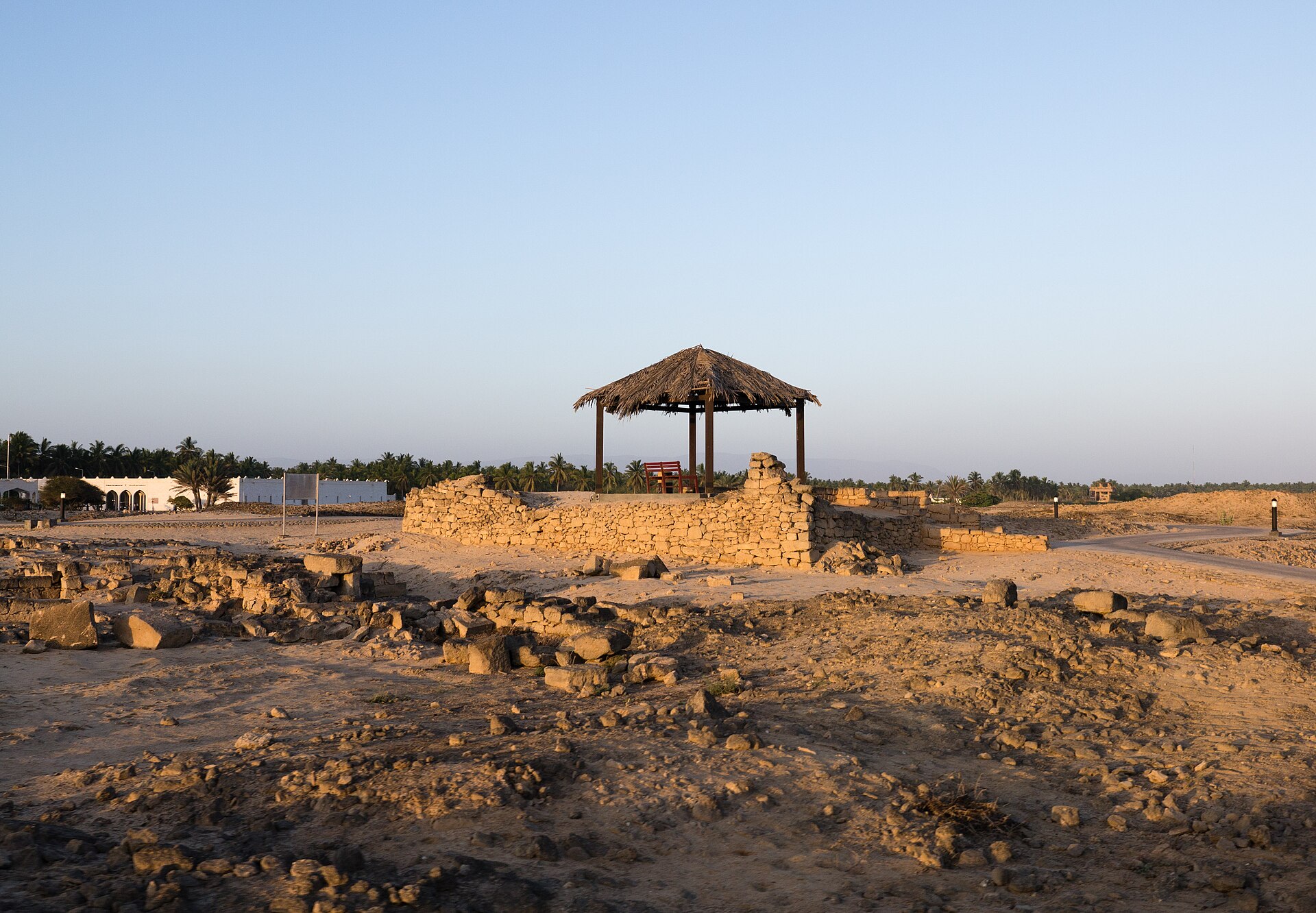
Al-Baleed, on the edge of modern Salalah, was once the great port of Zafar — a walled city of coral-stone that shipped frankincense, and later Chinese porcelain, across the Indian Ocean. Its ruins sit within a landscaped archaeological park with a museum that does the context-setting the stones themselves no longer can.
Further east, Sumhuram, perched above the lagoon at Khor Rori, was a fortified trading post that controlled the resin as it moved from inland groves toward the sea. The setting — cliffs, water, the Arabian Sea beyond — makes it one of the most atmospheric ruins in southern Arabia, frankincense history aside.
Salalah is the obvious hinge for all of this: a coastal city with an easy pace, a working souq that still trades frankincense and myrrh by the sackful, and enough hotel infrastructure to make it a comfortable base for several days of exploring. It’s also the only part of Oman genuinely touched by the khareef — the summer monsoon that rolls in off the Indian Ocean roughly between June and September, wrapping the Dhofar hills in mist, waterfalls and startling green while the rest of the Gulf swelters. The khareef turns Salalah into a domestic holiday destination for Gulf visitors escaping the heat elsewhere, and it changes the character of a Dhofar visit considerably — cooler, damper, and busier with regional tourists than the dry months either side of it.
The Land of Frankincense sites and their surrounding attractions — the tombs, the coastline, Job’s supposed shrine, the inland wadis — are spread across driving distances that run from a short hop within Salalah itself to an hour or more out to the more remote frankincense groves and Khor Rori. None of it is public-transport territory in any practical sense; a private vehicle and a driver who knows which turn-offs matter is how this trail is actually covered, and that routing — which sites in which order, with how much time at each — is exactly the kind of ground logistics an operator arranges rather than something worth improvising on arrival.
Dhofar essentially runs on two calendars. Outside the khareef, roughly October through May, the region behaves like the rest of Oman — hot, dry, clear-skied, and better suited to the archaeological sites, where you’ll want to be out in the open air without competing with monsoon drizzle or crowds. During the khareef itself, the appeal flips: the hills turn green, waterfalls run, and the draw becomes landscape and atmosphere as much as history, with the trade-off being greyer skies and considerably more domestic visitors filling the hotels. Neither season is objectively better — they’re simply different trips, and worth choosing deliberately rather than by accident.
Whichever window you travel in, entry requirements for Oman are worth confirming directly with an official source ahead of booking, since rules of this kind shift without much warning and this guide isn’t the place to fix a date to them.
Dhofar sits at the southern edge of a country we already know well: our Oman programme covers the north’s wadis and mountains in depth, and the frankincense trail extends that same unhurried, private-guide approach into the south. If Salalah and its ruins are the whole trip, or the anchor for a longer Omani itinerary, the routing, pacing and khareef-versus-dry-season timing are best worked out with us directly — specific dates, hotel selections and inclusions for a Dhofar-focused itinerary are available on enquiry rather than fixed in a guide like this one. Travellers drawn more broadly to Oman’s canyons, dunes and coastline should also look at Frankincense & Fjords, our seven-day route through Muscat, Jebel Akhdar and the Wahiba Sands, which shares its name with the very trade this guide traces.
Photo: Juozas Šalna, CC BY 2.0, via Wikimedia Commons
The Caravan Letter
No noise. One considered letter on where to go in the Orient and when, written by the people who plan these journeys.
